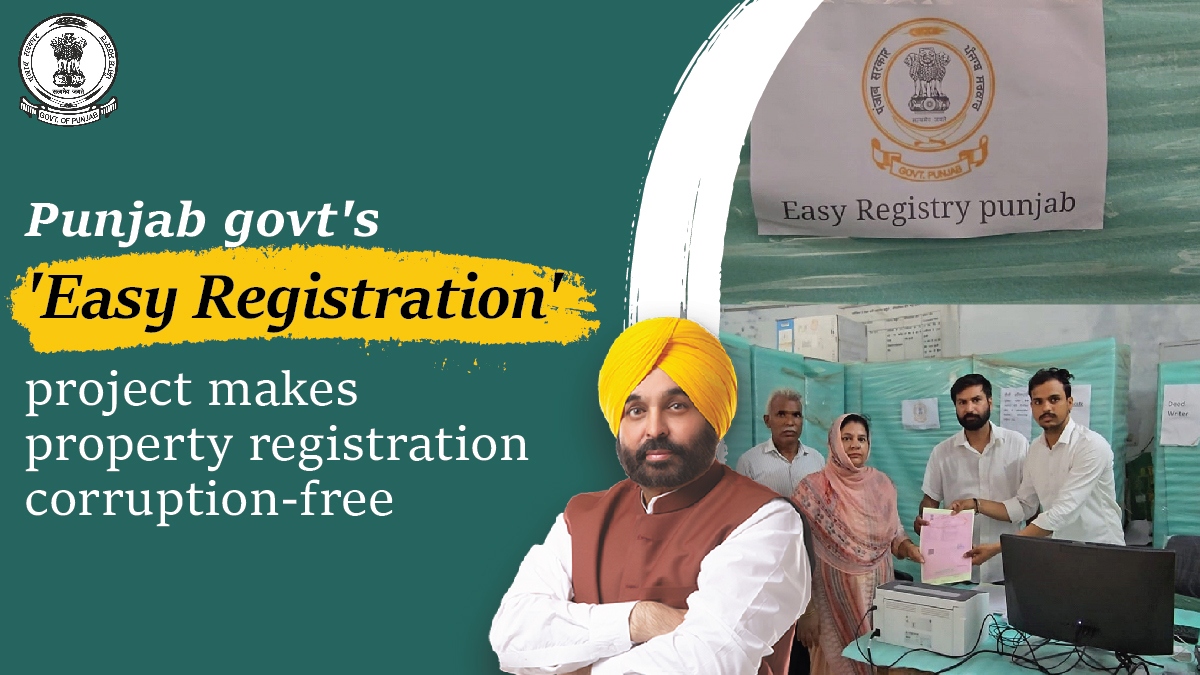
To address long-standing issues related to buying or selling property in the state, the Punjab government launched the ‘Easy Registration’ project. The initiative was initially launched as a pilot and later rolled out across all districts. The initiative has revolutionised the process of property registration by enhancing transparency, eliminating long queues, and curtailing the dominance of middlemen. It has several key features that empower citizens and ensure a hassle-free experience. It also marks the end of the previous system, often plagued by delays and demands for bribes.
Problems citizens faced earlier
Earlier, there was a huge scope for corruption, as objections to sale deeds were raised only at the last moment, when buyers and sellers had already exchanged money. This would usually put fear and pressure on people, forcing them to pay bribes to get their documents cleared. There was no fixed order for handling cases. Sub-Registrars could pick files randomly, leading to VIP culture, favouritism, and queue-jumping.
Moreover, the previous system would force people to register property only in the local tehsil, giving full control to one Sub-Registrar. Reporting corruption was difficult because senior officers were not easily accessible. Drafting a sale deed was another major problem. Although the official fee was ₹550, deed writers and lawyers charged much more. This stage itself became the starting point of bribery and exploitation.
On top of this, citizens had to visit banks multiple times to pay stamp duty and fees. If objections were raised later, refunds became another headache. There was no real-time information, so people depended heavily on agents for updates.
What has changed with the Easy Registration project?
Under this project, the government has redesigned the entire process with technology and strict timelines. Under this project, the local Sub-Registrar’s monopoly has been ended, and it fights bribery by sending automatic WhatsApp messages encouraging direct reporting to the Deputy Commissioner.
The government has introduced a simplified and affordable ‘Draft My Deed’ online module and fixed a fee of Rs 550 for drafting at Sewa Kendras. Moreover, doorstep deed drafting through helpline 1076 has also been introduced. Also, all payments, including stamp duty, registration fees, and other charges, can now be made online in one go through multiple banks.
Punjab govt’s ‘Easy Registration’ project makes property registration corruption-free